Mastering the Aesthetic: The Versatility of Retro Classic Style Engraved Ornament Designs
In the ever-evolving landscape of visual communication, there is a persistent and powerful allure to designs that feel timeless. Among these enduring styles, the Retro Classic Style Engraved Ornament stands out as a particularly rich resource for designers, artists, and business owners seeking to infuse their projects with elegance, history, and sophistication. These intricate silhouettes are not merely decorative afterthoughts; they are foundational elements that can transform a simple layout into a narrative piece. Whether you are crafting a logo for a boutique brand or designing a wedding invitation that whispers of heritage, understanding the depth and application of these engraved patterns is essential for modern creative workflows.
The Anatomy of Timeless Elegance
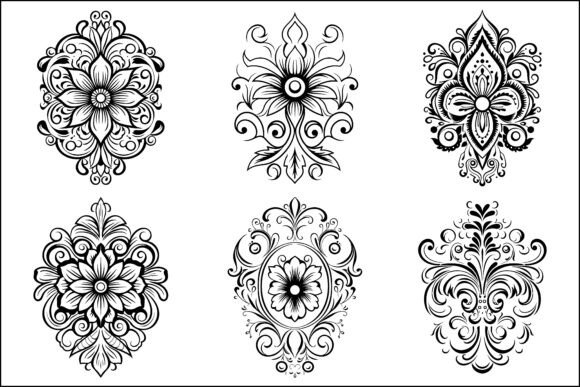
What defines a Retro Classic Style Engraved Ornament? At its core, this design language draws heavily from historical periods where craftsmanship was paramount. Think of the Victorian era's obsession with detail, the Art Nouveau's flowing organic lines, or the rigid symmetry of Art Deco. These ornaments are characterized by high-contrast silhouettes, often mimicking the look of hand-engraved metalwork or etched glass. They feature complex interplay between positive and negative space, creating a texture that feels tactile even when viewed on a digital screen.
The appeal lies in their ability to convey authority and luxury without saying a word. When a viewer encounters a well-placed ornamental border or a central medallion in this style, it triggers an association with quality and tradition. This psychological connection is why these assets are so valuable in branding and marketing. Unlike fleeting trends that fade within a season, the classic engraved aesthetic has survived centuries because it taps into a fundamental human appreciation for order, beauty, and complexity.
Technical Precision and Scalability
For professionals working in graphic design, the technical quality of these assets is just as important as their visual appeal. A true Retro Classic Style Engraved Ornament file set must be robust enough to handle various production environments. In professional settings, scalability is non-negotiable. An ornament that looks crisp on a business card must remain equally sharp when blown up for a billboard or printed on a large-scale wallpaper.
This is where the format of the files becomes critical. High-quality resources typically include vector formats like EPS, which allow for infinite scaling without pixelation. Additionally, having raster versions in PNG and JPG ensures compatibility with web design tools and quick mockups. With a standard artboard size of 4500×5400 pixels, these files offer a resolution that exceeds most standard print requirements, ensuring that fine details—such as the delicate filigree or the sharp edges of a geometric frame—remain intact during the printing process. This level of precision allows creators to focus on composition rather than worrying about image degradation.
Strategic Applications in Modern Branding
The utility of these vintage-inspired assets extends far beyond simple decoration. They serve as strategic tools for differentiation in crowded markets. In the realm of Graphic Design, incorporating a Retro Classic Style Engraved Ornament can instantly elevate a logo or brand identity. For instance, a law firm or a financial consultancy might use a subtle engraved crest to communicate stability and trust. Conversely, a craft brewery or a specialty coffee roaster might utilize bolder, more elaborate frames to suggest artisanal quality and heritage.
Packaging represents another area where these designs shine. In an era of minimalist packaging, a touch of retro ornamentation can make a product stand out on the shelf. Imagine a perfume bottle wrapped in a box featuring an elegant, engraved floral border, or a cosmetic jar adorned with a vintage label that includes intricate corner pieces. This approach signals to the consumer that the contents are luxurious and carefully curated. It transforms a commodity into a gift, adding perceived value through design alone.
Enhancing Stationery and Personal Correspondence
Personal and professional correspondence also benefits immensely from this aesthetic. Stationery items such as invitations, greeting cards, and wedding announcements rely heavily on visual hierarchy and mood. A wedding invitation framed by a classic engraved silhouette sets a tone of formality and romance before the guest even reads the text. Similarly, corporate letterheads or certificates of achievement gain gravitas when accented with traditional ornamental borders. These elements guide the eye and frame the content, ensuring that the message is received with the appropriate level of respect and attention.
Creative Expansion: From Digital to Physical
While digital applications are common, the true versatility of the Retro Classic Style Engraved Ornament is realized when bridging the gap between screen and physical object. These designs are not limited to flat media; they are excellent sources of inspiration for three-dimensional crafts and manufacturing.
In Furniture Decoration, these silhouettes can be adapted for wood carving or metal inlay work. A cabinet maker might trace an intricate scroll pattern onto oak to create a unique headboard, while a metalworker could laser-cut the same design into a gate or railing. The high contrast of the silhouette makes it ideal for CNC routing and laser engraving, allowing hobbyists and manufacturers alike to translate digital files into tangible art.
The fashion industry also embraces these motifs. Clothing Design often utilizes retro ornamentation to embellish fabrics. Whether it is a subtle embroidery on a collar, a screen-printed pattern on a t-shirt, or a detailed lace overlay on a dress, these classic details add a layer of sophistication that mass-produced graphics often lack. Designers can mix and match different elements from a comprehensive file set to create seamless patterns or focal points that resonate with current vintage trends.
Visual Storytelling in Publishing and Media
For authors and publishers, the cover of a book is its primary sales tool. Book Covers for historical fiction, classic literature, or academic texts frequently employ engraved ornaments to signal genre and tone. A spine adorned with a repeating geometric motif or a front cover featuring a central emblem surrounded by foliage immediately tells the reader what to expect. This visual shorthand is powerful in both physical bookstores and digital marketplaces where thumbnails compete for attention.
Similarly, in Website Design, these elements can break the monotony of modern, flat interfaces. Used sparingly as headers, footer accents, or background textures, they add depth and character to a site. A blog dedicated to history, a portfolio for a calligrapher, or an e-commerce site selling antique goods can leverage these assets to create an immersive browsing experience that aligns with the brand's narrative.
Empowering Creatives and Entrepreneurs
Access to high-quality design assets is a significant advantage for small business owners and independent creators. Purchasing a comprehensive pack that includes multiple file formats—such as 6 EPS, 6 PNG, and 6 JPG files—provides the flexibility needed to tackle diverse projects without the need for expensive software subscriptions or time-consuming manual illustration. This efficiency allows entrepreneurs to focus on growing their business rather than getting bogged down in asset creation.
For Tattoo Design enthusiasts, these silhouettes offer a wealth of inspiration. The bold lines and clear definition of engraved ornaments translate perfectly to skin. Artists can adapt these patterns into flash sheets or custom designs, offering clients a look that is both traditional and deeply personal. The intricate nature of these designs allows for large-scale pieces that age well, maintaining their clarity and impact over time.
Furthermore, in the realm of Event Decor, these designs facilitate themed parties and gatherings. Whether it is a Gatsby-style gala or a rustic vintage wedding, printed banners, table runners, and signage featuring retro ornaments can instantly transport guests to another era. The ability to customize these assets means that event planners can ensure every visual element aligns perfectly with the desired atmosphere.
Illustration and Artistic Integration
Finally, for illustrators and fine artists, the Retro Classic Style Engraved Ornament serves as a building block for larger compositions. These elements can be integrated into digital paintings, mixed-media collages, or architectural sketches. By layering these vintage components over contemporary imagery, artists can create striking juxtapositions that challenge perceptions of time and style. This technique is particularly effective in editorial illustrations, where the goal is to evoke a specific mood or context quickly and effectively.
The integration of these ornaments into Printables like posters, planners, and calendars also offers a low-barrier entry point for creators to monetize their skills. A planner adorned with classic borders appeals to those who appreciate organization with a touch of nostalgia. Similarly, wall art featuring enlarged, stylized ornaments can become a focal point in home decor, proving that these designs have a place in both commercial and domestic spheres.
Conclusion on Enduring Value
The Retro Classic Style Engraved Ornament is more than a collection of images; it is a toolkit for storytelling, branding, and artistic expression. Its ability to bridge the gap between historical craftsmanship and modern digital technology makes it an indispensable asset for a wide range of users. From the boardroom to the tattoo parlor, from the printing press to the web browser, these designs offer a versatile solution for anyone looking to add a layer of refinement and character to their work. By leveraging the high resolution and multi-format availability of these files, creators can ensure that their vision is executed with precision, regardless of the medium. As we continue to navigate a fast-paced digital world, the grounding influence of these classic aesthetics provides a necessary counterbalance, reminding us of the enduring power of beauty and detail.