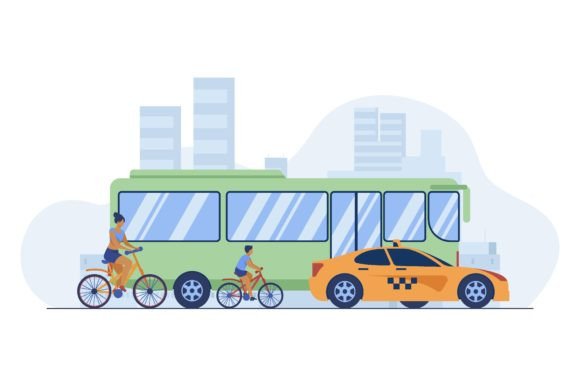
Bus, Taxi and Cyclist Driving on City Road: Capturing Urban Dynamism
The rhythm of a modern city is defined by its movement. From the early morning rush to the late-night commute, the streets are a living tapestry woven from the paths of buses, taxis, and cyclists. This constant flow represents more than just transportation; it is the heartbeat of metropolitan life. When we translate this kinetic energy into visual form, specifically through the lens of Bus, Taxi and Cyclist Driving on City Road, we capture a moment that resonates deeply with anyone who has ever navigated an urban environment. This concept is not merely about depicting vehicles; it is about illustrating the shared experience of city living, where diverse modes of transport intersect in a dance of daily routine.
In the realm of digital design and visual storytelling, the ability to convey complex narratives through simple imagery is paramount. The illustration titled Transport, Bicycle, Car serves as a prime example of how graphic art can encapsulate the essence of urban traffic. By featuring a bus, taxi, and cyclist traversing their respective routes, the design offers a snapshot of day-to-day city dynamism. It strips away the chaos often associated with traffic congestion and replaces it with a harmonized, visually stimulating representation of order within motion. For professionals, creators, and business owners, understanding the power of such imagery is crucial for communicating brand identity and connecting with audiences on an emotional level.
The Evolution of Urban Visual Storytelling
Visual trends in web design and marketing have shifted significantly over the last decade. We have moved away from hyper-realistic photography and heavy gradients toward cleaner, more direct forms of communication. The flat vector style, which characterizes the artwork described here, is at the forefront of this evolution. This aesthetic choice is not arbitrary; it reflects a broader cultural desire for clarity, speed, and efficiency—values that mirror the fast-paced nature of the cities they depict.
When examining Bus, Taxi and Cyclist Driving on City Road, one notices how the flat vector approach simplifies complex scenes without losing their core meaning. The bus becomes a symbol of public infrastructure, the taxi represents on-demand convenience, and the cyclist embodies the growing trend toward sustainable mobility. These elements are rendered with vibrant colors and clean lines, making them instantly recognizable and adaptable across various digital platforms. This shift towards flat design allows viewers to process information quickly, a necessity in an era of short attention spans and information overload.
The relevance of this specific imagery extends beyond mere aesthetics. As cities around the world grapple with issues of congestion, pollution, and infrastructure development, the conversation around transportation is becoming increasingly nuanced. Visuals that accurately reflect this mix of traditional and modern transit options help normalize the idea of a multi-modal urban lifestyle. They tell a story where the car is no longer the sole king of the road but part of a larger ecosystem that includes public transit and active transport.
Why Flat Vector Art Resonates Today
The appeal of flat vector illustrations lies in their versatility and scalability. Unlike raster images, which lose quality when resized, vector graphics maintain their crispness whether displayed on a massive billboard or a smartphone screen. This technical advantage makes them ideal for the diverse needs of modern digital marketing. A graphic like Transport, Bicycle, Car can be seamlessly integrated into a landing page banner, a social media post, or a corporate presentation slide without any loss of fidelity.
Furthermore, the modern feel exuded by these designs aligns perfectly with current user expectations. Today's internet users are accustomed to sleek interfaces and intuitive navigation. Cluttered, overly detailed images can create cognitive friction, whereas clean, stylized graphics guide the eye and support the overall user experience. The vibrant color palette used in these illustrations adds an element of energy and optimism, countering the often stressful reality of city traffic with a positive, engaging visual narrative.
Integrating City Life Imagery into Modern Workflows
For businesses and content creators, selecting the right visual assets is a strategic decision. The image of a bus, taxi, and cyclist sharing the road is particularly potent for industries related to travel, logistics, urban planning, technology, and lifestyle services. It speaks to a demographic that values connectivity and efficiency. Whether you are a startup launching a ride-sharing app, a municipality promoting public transit, or a blogger writing about sustainable living, this type of imagery provides an immediate context.
Consider the practical implications for a marketing campaign aimed at urban professionals. Using a graphic that highlights the diversity of transport options can signal inclusivity and adaptability. It suggests that your brand understands the complexities of city life and offers solutions that fit into a busy schedule. The Bus, Taxi and Cyclist Driving on City Road motif effectively communicates that there is no "one size fits all" approach to getting around, mirroring the personalized services many modern companies strive to provide.
Moreover, the integration of such visuals into website designs can significantly enhance engagement metrics. Landing pages that utilize high-quality, relevant illustrations tend to have lower bounce rates and higher conversion rates. The reason is simple: people connect with visuals that reflect their reality. When a user sees a familiar scene—a cyclist weaving through traffic, a taxi waiting at a corner, a bus pulling up to a stop—they feel understood. This psychological connection fosters trust and encourages further interaction with the content.
Practical Applications for Creators and Businesses
- Landing Pages: Use the illustration as a hero image to immediately set the tone for websites focused on urban mobility, city guides, or local services. The vibrant style grabs attention and sets a professional yet approachable mood.
- Social Media Campaigns: Leverage the versatility of the flat vector format to create animated versions or static posts that highlight different aspects of city life. The distinct shapes of the bus, taxi, and cyclist make them easily identifiable even at smaller sizes.
- Presentation Decks: Incorporate the graphic into slides discussing market trends, urban development, or consumer behavior. It serves as a visual anchor that reinforces key points about the changing landscape of transportation.
- Educational Materials: For educators and trainers, this image can be used to illustrate concepts related to traffic safety, environmental impact, or the economics of public versus private transport.
Reflecting Changing Habits and Lifestyle Shifts
The rise in popularity of imagery like Transport, Bicycle, Car is a direct reflection of shifting societal habits. We are witnessing a fundamental change in how people perceive mobility. The dominance of the private car is waning in many major cities, replaced by a more eclectic mix of transportation methods. People are increasingly choosing to cycle for short distances, relying on ride-hailing apps for flexibility, and utilizing public buses for longer commutes to reduce costs and carbon footprints.
This shift is driven by a combination of factors, including rising fuel costs, environmental awareness, and the availability of better alternatives. The visual representation of these choices in a single frame captures the zeitgeist of the modern urbanite. It acknowledges that the city dweller is pragmatic, adaptive, and conscious of their surroundings. By featuring a cyclist alongside motorized vehicles, the artwork validates the role of human-powered transport in the urban ecosystem, a sentiment that is gaining traction globally.
Additionally, the hustle and bustle of city life depicted in these graphics resonate with the entrepreneurial spirit. In a world where time is money, efficient transportation is critical for productivity. The image of a taxi speeding through traffic or a bus moving along a dedicated lane speaks to the urgency and momentum of business life. It reminds us that the city is a place of opportunity, but navigating it requires strategy and the right tools.
Meeting User Expectations in a Digital Age
Today's consumers expect brands to be aware of current trends and social issues. Using outdated or generic stock photos can make a company appear disconnected from reality. In contrast, utilizing a modern, flat vector illustration that accurately portrays the current state of urban transport demonstrates cultural competence. It shows that the brand is paying attention to how people actually live and move.
The Bus, Taxi and Cyclist Driving on City Road concept also addresses the need for diversity in representation. Traditional stock imagery often focuses heavily on cars, neglecting other vital modes of transport. By including a cyclist and a bus, the design offers a more inclusive view of the city. This inclusivity is not just a moral imperative but a business advantage, as it broadens the appeal of the content to a wider audience segment.
Strategic Recommendations for Implementation
To maximize the impact of such visuals, it is essential to integrate them thoughtfully into your overall design strategy. Avoid using the image simply as decoration; instead, let it serve a functional purpose in conveying your message. Ensure that the color scheme of the illustration complements your brand identity while maintaining the vibrancy that makes the flat vector style so effective.
When deploying these graphics across different channels, consider the context. On a mobile device, the simplicity of the flat design ensures that the details remain clear even on small screens. On desktop monitors, the larger canvas allows for more elaborate compositions that can include additional elements like buildings or street signs to further enrich the urban setting. Regardless of the platform, the goal is to create a seamless visual experience that supports the user's journey.
Finally, remember that the best visual content tells a story. The story of Transport, Bicycle, Car is one of movement, connection, and the dynamic interplay of different lifestyles within a single space. By embracing this narrative, creators and businesses can forge stronger connections with their audiences, offering them a glimpse into the fascinating, ever-evolving world of the modern city. As urban landscapes continue to transform, the need for authentic, versatile, and visually engaging representations of city life will only grow, making assets like this indispensable for forward-thinking professionals.