6 Elements for Web Design Projects: A Strategic Framework for Better Outcomes
In the fast-paced world of digital creation, clarity often gets lost in the noise of complex tools and endless feature lists. For entrepreneurs, freelancers, and design teams alike, the difference between a successful launch and a stalled project often comes down to how well the foundational pieces are defined before a single line of code is written. This is where the concept of 6 Elements for Web Design Projects becomes not just a checklist, but a strategic compass. By focusing on these core components, you can streamline your workflow, reduce costly revisions, and ensure that every visual decision serves a specific business goal.
The true value of this framework lies in its ability to simplify complexity. When you strip away the non-essentials and focus on the six critical pillars of design execution, you create a robust structure that supports both creativity and operational efficiency. Whether you are building a prototype for a startup or refining the user interface for an established brand, understanding and applying these elements ensures that your work remains intentional rather than decorative.
The Strategic Foundation of Web Design Execution
Many projects fail not because of poor aesthetics, but because of misaligned objectives. The 6 Elements for Web Design Projects framework forces a pause for reflection. It demands that stakeholders answer fundamental questions about purpose, audience, and functionality before moving into the visual phase. This approach shifts the conversation from "what does it look like?" to "how does it work for the user and the business?"
When you apply this mindset, you are essentially building a contract with your future self and your clients. You are establishing a set of non-negotiables that guide every subsequent decision. For example, if one of your six elements is "Accessibility," then every button, arrow, and search bar you choose must meet those criteria from day one. This prevents the common pitfall of retrofitting accessibility features after the design is complete, a process that is often expensive and technically challenging.
Furthermore, this framework aids in resource allocation. By identifying the six most critical aspects of your project early, you can direct your budget, time, and talent toward areas that yield the highest return on investment. Instead of spreading resources thin across a dozen minor details, you concentrate on the elements that drive engagement and conversion. This is particularly vital for small business owners and freelancers who operate with limited margins and cannot afford wasted effort.
Why Simplicity Drives Better Decisions
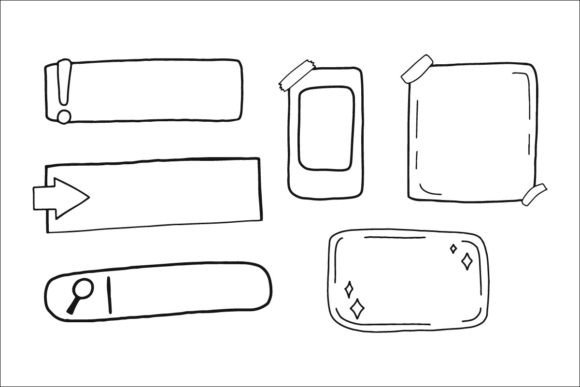
One of the most powerful applications of this framework is in the realm of prototyping and wireframing. Before high-fidelity graphics are introduced, the structure of the site must be sound. This is where simple, hand-drawn user interface elements play a crucial role. Using black-and-white sketches for buttons, arrows, and search bars allows designers to focus purely on layout and flow without the distraction of color or texture.
These hand-drawn assets serve as a neutral ground for collaboration. Because they lack the polish of final production art, they invite feedback. Clients are more likely to suggest structural changes to a rough sketch than to a fully rendered image. This aligns perfectly with the 6 Elements for Web Design Projects philosophy: prioritize function and strategy over premature aesthetic perfection. The goal is to validate the concept, not to sell the final look.
Leveraging Hand-Drawn UI Elements for Prototyping
The transition from abstract idea to concrete plan requires tools that bridge the gap between thought and execution. High-quality, simple hand-drawn user interface elements provide exactly that bridge. These assets, typically available in formats like EPS, SVG, JPEG, and PNG, offer versatility that rigid, pre-made templates cannot match. They allow for rapid iteration, enabling teams to test multiple layouts and user flows in a fraction of the time.
Consider the utility of a simple black-and-white arrow or a sketched search bar. In a wireframe, these elements communicate intent clearly. An arrow indicates direction; a box suggests input. There is no ambiguity. When you integrate these into your workflow, you are adhering to the principle of clarity, which is central to effective web design. The absence of color forces the viewer to focus on the hierarchy and the path the user will take through the site.
Moreover, these elements are scalable. A vector file (SVG or EPS) can be resized to fit any screen dimension without losing quality, while high-resolution JPEGs and PNGs ensure that even large-format presentations look crisp. The availability of these files in various formats—such as the 7 EPS files, 6 SVG files, and high-resolution images found in professional asset packs—means that designers have the flexibility to adapt their prototypes for different stages of the development process.
Optimizing Workflow with Versatile Asset Packs
Efficiency is a key component of the 6 Elements for Web Design Projects. Time spent searching for the right icon or drawing a basic button from scratch is time taken away from strategic planning. Having a curated collection of hand-drawn UI elements ready to use accelerates the design phase. It allows the team to move quickly from brainstorming to visualization.
For instance, when creating a low-fidelity mockup, you can drag and drop a sketched button to represent a call-to-action. Later, as the project matures, that same element can be replaced with a polished version, or refined further if the design direction changes. This modularity reduces friction and keeps the momentum going. It also ensures consistency across different screens and devices, as the same set of elements is used throughout the prototype.
This approach is particularly beneficial for educators and trainers teaching web design principles. Using simple, universal symbols helps students grasp the fundamentals of user interface design without getting bogged down in advanced software techniques. It democratizes the learning process, making it accessible to hobbyists and beginners who may not yet have mastered complex design tools.
Intentional Planning and Risk Mitigation
While the benefits of using structured frameworks and simplified assets are clear, there are risks associated with their misuse. One common pitfall is relying too heavily on templates or pre-made elements without customizing them to fit the specific needs of the project. If a designer simply drags and drops hand-drawn icons without considering the context, the result can feel generic and disconnected from the brand identity.
The 6 Elements for Web Design Projects framework guards against this by emphasizing intentionality. Every element chosen must serve a purpose within the broader strategy. Ask yourself: Does this arrow guide the user effectively? Is this search bar placed where users expect it? If the answer is no, then the element should be removed or redesigned, regardless of how aesthetically pleasing it might be.
Another risk is the potential for scope creep. When working with flexible assets, it can be tempting to add more and more features to the prototype, expanding the project beyond its original boundaries. To avoid this, the framework acts as a constraint. By sticking to the six core elements, you maintain focus and prevent the project from becoming bloated and unmanageable. This discipline is essential for maintaining timelines and budgets, especially for small business owners and freelancers.
Aligning Design with Long-Term Business Goals
Ultimately, web design is not just about creating something that looks good; it is about solving problems and achieving results. The 6 Elements for Web Design Projects provides a lens through which to view every design decision. Are we improving the customer experience? Are we strengthening our brand positioning? Are we enhancing productivity?
When these questions are answered affirmatively, the design moves from being a static image to a dynamic tool for growth. Simple hand-drawn elements, when used correctly, become part of a larger narrative that tells the story of the brand and guides the user toward a desired action. They are the scaffolding upon which a successful digital presence is built.
For decision-makers and professionals, adopting this mindset means investing in the right tools and processes from the start. It means recognizing that a well-planned wireframe is worth more than a beautiful but flawed website. It means valuing clarity, consistency, and strategic alignment above all else. By embracing the 6 Elements for Web Design Projects, you position yourself to deliver work that is not only visually appealing but also functionally superior and commercially viable.
In conclusion, the journey to a successful web design project begins with a clear understanding of the fundamentals. Whether you are utilizing a comprehensive set of hand-drawn UI assets or defining your strategic priorities, the goal remains the same: to create a digital experience that resonates with users and drives meaningful outcomes. By focusing on the essential elements and avoiding unnecessary distractions, you can navigate the complexities of modern web design with confidence and precision.